
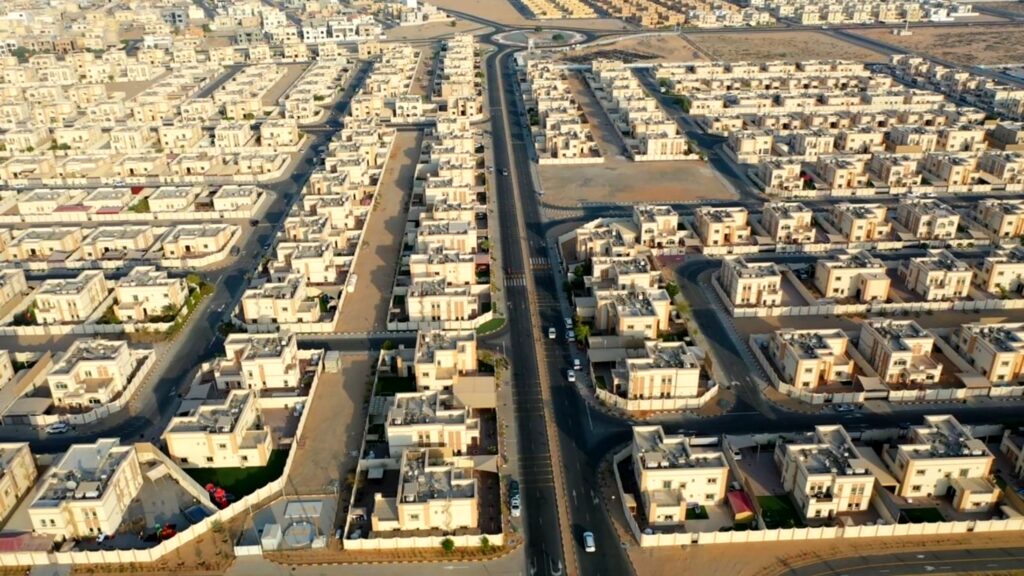
Abu Dhabi’s residential market is powered by two distinct engines: international and expatriate investor demand — which drove 84% of investment zone transactions in Q1 2026 — and the government’s long-standing, structurally embedded commitment to Emirati homeownership. On May 5, 2026, the UAE Ministry of Energy and Infrastructure confirmed the Q1 2026 performance of the second engine in precise detail. The Sheikh Zayed Housing Programme issued 759 housing approvals worth a combined AED 616 million in the first three months of 2026 alone — a figure that speaks directly to the depth, scale, and policy conviction behind Abu Dhabi’s residential market fundamentals.
For investors tracking the emirate’s property sector, this data point is not peripheral. It is a direct indicator of sovereign-level commitment to residential supply, homeownership rates, and the social infrastructure that underpins long-term property demand across Abu Dhabi’s communities.
Q1 2026 Programme Breakdown: The Numbers in Full
Abu Dhabi has issued 759 housing approvals worth AED 616 million in the first quarter of 2026 as part of the Sheikh Zayed Housing Programme.
| Approval Category | Units Approved | Value (AED) |
| Housing Grants & Benefits | 129 | 102.9 million |
| Housing Loans (with national banks) | 583 | 460.5 million |
| Government Housing Loans (residential complexes) | 47 | 53.2 million |
| Total | 759 | 616 million |
The composition of these approvals is instructive. Housing loans delivered in partnership with national banks — the largest category at 583 approvals worth AED 460.5 million — reflect a public-private financing model that leverages the balance sheets of UAE’s commercial banking sector to scale government housing delivery without concentrating all fiscal exposure on the public purse. The 129 outright grants and benefits worth AED 102.9 million target the most vulnerable Emirati households, while the 47 government loans within existing residential complexes signal continued investment in established community infrastructure.
The Programme’s 27-Year Track Record: Scale That Matters
The Q1 2026 figures sit within a programme history that is exceptional by any global standard.
| Metric | Figure |
| Programme Established | 1999 |
| Total Housing Support Decisions (since 1999) | 73,000+ |
| Total Value of Decisions (since 1999) | AED 50 billion+ |
| Backlog Applications Eliminated | 12,000+ |
| Fulfilment Rate (previous) | 34% |
| Fulfilment Rate (current) | 94% |
| UAE National Homeownership Rate | 91% |
The public-private partnership model in housing finance has marked a major shift in the Sheikh Zayed Housing Program’s efficiency. It has helped eliminate more than 12,000 backlog applications, increased the fulfillment rate from 34 percent to 94 percent, and supported achieving a 91 percent home ownership rate, demonstrating the effectiveness and long-term socio-economic impact of the UAE’s housing policies.
A 91% homeownership rate is not simply a social achievement — it is a market stability metric. Societies with high homeownership rates experience structurally lower forced-sale risk, lower vacancy rates in owned residential stock, and stronger community-level maintenance of property values. For investors in Abu Dhabi’s freehold communities, the emirate’s homeownership culture is a foundational element of the price stability that distinguishes this market from more speculative real estate environments globally.
The Broader Policy Architecture: AED 106 Billion in New Communities
The Q1 2026 programme approvals do not stand alone — they are the operational delivery layer of a substantially larger policy framework that Abu Dhabi’s government has been building systematically since 2025.
| Policy Initiative | Value | Scale |
| New Emirati Communities Announced (Sep 2025) | AED 106 billion | 13 communities, 40,000+ units and plots |
| Quality of Life Infrastructure Investment (Sep 2025) | AED 42 billion | Emirate-wide |
| UAE Federal Budget Allocation (Jul 2025) | AED 900 billion | 2027–2029 cycle |
| ADHA Housing Package (Crown Prince Approval) | AED 4.21 billion | 2,652 Emirati citizens |
In September 2025, Abu Dhabi announced the development of 13 new communities for Emiratis, comprising more than 40,000 residential units and plots, at a total cost of AED 106 billion. For context, that single commitment — 40,000 units across 13 communities at AED 106 billion — represents a capital allocation to residential development that few sovereign governments anywhere in the world have matched in a single announcement. It guarantees a multi-year pipeline of construction activity, infrastructure spending, and community development that will continue to anchor Abu Dhabi’s residential market regardless of short-term global headwinds.
For investors seeking to understand how these government-driven supply and demand dynamics translate into specific buying opportunities across Abu Dhabi’s freehold market, consulting a trusted property advisor provides the market-level intelligence needed to position correctly within this environment.
What This Means for Abu Dhabi’s Property Market Investors
The Sheikh Zayed Housing Programme’s Q1 2026 performance connects directly to three investment fundamentals that every property buyer in Abu Dhabi should understand.
1. Demand is structurally embedded, not cyclical
The Ministry of Energy and Infrastructure, through the Sheikh Zayed Housing Programme, issued 759 housing approvals in the first quarter of 2026, with a total value exceeding AED 616 million, underscoring continued momentum in the UAE’s housing sector. Government-backed homeownership programmes of this scale create baseline residential demand that persists through market cycles. Even during periods of global uncertainty, sovereign housing commitments of AED 616 million per quarter sustain construction activity, materials procurement, and professional services employment — all of which feed directly into the broader residential market ecosystem.
2. Supply pipeline has sovereign-level backing
The combination of 13 new Emirati communities (AED 106 billion), the Sheikh Zayed Housing Programme’s ongoing delivery (AED 50 billion+ since 1999), and Aldar’s government-mandated 9,000-unit affordable rental pipeline — confirmed in Q1 2026 — means Abu Dhabi’s residential supply is being managed at the highest levels of government with a 10-to-15-year planning horizon. This is the opposite of speculative development.
3. The 91% homeownership rate protects market stability
| Comparison Metric | Abu Dhabi / UAE | Global Average |
| National Homeownership Rate | 91% | ~65% |
| Programme Fulfilment Rate | 94% | — |
| Q1 2026 Housing Approvals Value | AED 616 million | — |
| Total Programme Value Since 1999 | AED 50 billion+ | — |
A 91% homeownership rate among UAE nationals, achieved through a programme with a 94% fulfilment rate, creates a residential market base that is deeply owner-occupied and structurally resistant to the distressed-sale dynamics that destabilise property markets in other global cities.
Conclusion: Government Housing Policy as an Investment Signal
The Sheikh Zayed Housing Programme’s Q1 2026 figures — 759 approvals, AED 616 million, a 94% fulfilment rate, and a 91% national homeownership rate — are not simply welfare statistics. They are investment signals. They confirm that Abu Dhabi’s residential property market is underpinned by one of the world’s most ambitious and consistently delivered sovereign housing commitments, operating in parallel with the record-breaking international investment flows that pushed Q1 2026 total market transactions to AED 66 billion. The two engines — government-backed Emirati homeownership and global investor demand — are running simultaneously and reinforcing each other. That combination is the structural foundation of Abu Dhabi’s property market stability in 2026 and beyond.