
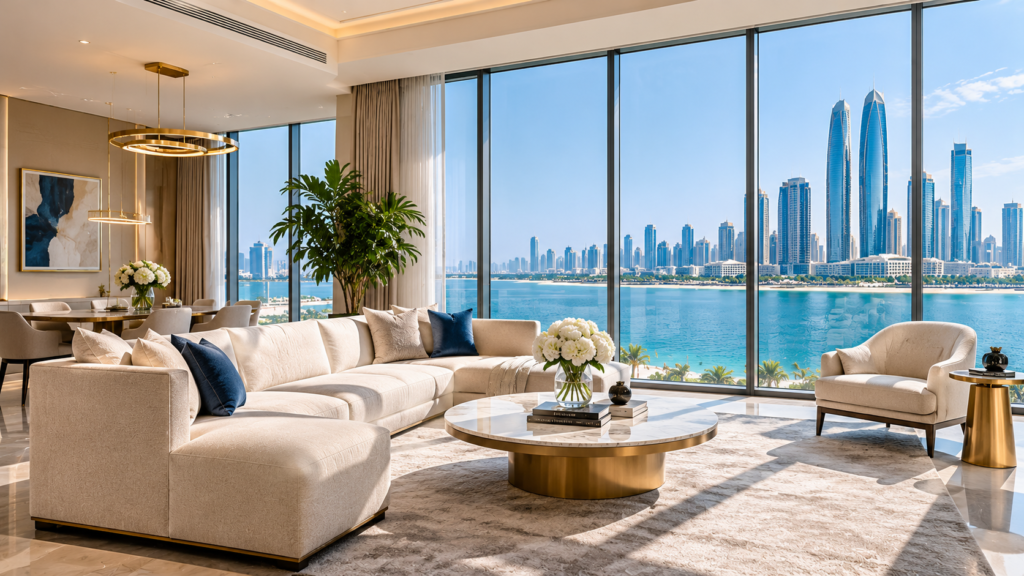
A luxury home can have an exceptional location, beautiful architecture and a prestigious address. However, these qualities do not automatically make it easy to resell.
Some properties attract serious buyers because they combine practical layouts, desirable views, reasonable ownership costs and competitive pricing. Others struggle to generate offers despite their impressive appearance and premium positioning.
The difference often comes down to resale liquidity: how easily a property can attract a qualified buyer at a realistic market price.
In Abu Dhabi, luxury property resale potential depends on the home’s size, layout, views, parking, service charges, building condition, financing options, future competition and the number of buyers who can realistically afford it.
In my experience advising luxury property buyers, I believe resale potential deserves attention before the initial purchase, not only when an owner decides to sell.
Understanding Luxury Property Resale Potential
Luxury property resale potential reflects how attractive a home may be to future buyers under realistic market conditions.
A property may command a high valuation because of its location or exclusivity. However, that does not mean a large number of buyers will compete to purchase it.
For example, a unique waterfront mansion may appeal to a small group of ultra-high-net-worth buyers. Meanwhile, a well-designed family villa at a more accessible price could attract a broader audience.
Neither property guarantees a faster sale.
Ultimately, successful resale depends on the relationship between the property’s features, asking price and actual buyer demand.
The Difference Between Price and Liquidity
Market value and resale liquidity are closely related but represent different concepts.
Market value concerns what a property may reasonably achieve under prevailing market conditions.
Resale liquidity concerns how readily the owner can find a suitable buyer without making a substantial price concession.
Therefore, an expensive property can still have limited resale liquidity, even when its underlying location remains desirable.
A Luxury Resale Case Study: Two Apartments in the Same Community
Consider two fictional luxury apartments within the same established Abu Dhabi waterfront development.
Both properties benefit from a premium location. However, their layouts, pricing and practical features create different resale prospects.
The comparison below uses hypothetical figures solely to demonstrate the evaluation process. It does not represent actual listings, completed transactions or verified selling periods.
| Resale factor | Desirable unit | Difficult-to-sell unit |
|---|---|---|
| Asking price | AED 5.2 million | AED 6.4 million |
| Apartment size | 220 sqm | 250 sqm |
| Price per sqm | Approx. AED 23,636 | AED 25,600 |
| Layout | Efficient three-bedroom design | Large but inefficient layout |
| View | Open waterfront outlook | Partially obstructed |
| Parking | Two allocated spaces | One allocated space |
| Service charges | Stable recent history | Higher, with recent increases |
| Property condition | Well maintained | Requires updating |
| Asking price | Supported by comparable evidence | Premium needs stronger justification |
| Potential buyer pool | Relatively broad | More selective |
Although the second apartment offers 30 additional square metres, it costs AED 1.2 million more.
However, the larger unit does not necessarily deliver better value.
Its layout may offer less practical space, while the limited parking and partially obstructed view could reduce its appeal to some families.
Furthermore, its higher recurring expenses may influence the total ownership budget.
The first apartment may therefore appeal to more qualified buyers, provided its asking price reflects genuine market evidence.
This example highlights an important principle: a property’s resale strength depends on how its features compare with available alternatives at the same price point.
Property Size and Layout Influence Buyer Demand
Property size plays an important role in luxury real estate. However, larger homes do not always attract stronger resale interest.
A spacious villa may offer impressive living areas and additional bedrooms. Nevertheless, its asking price may place it beyond the budget of many potential buyers.
Consequently, the pool of qualified purchasers can become more selective as the price increases.
Practical Layouts Create Wider Appeal
The efficiency of the floor plan matters just as much as the total area.
For example, a three-bedroom apartment with generous living space, functional storage and well-proportioned rooms may suit a broad range of households.
Meanwhile, a larger apartment with narrow corridors, awkward room shapes or limited furniture options may appeal to fewer buyers.
Luxury villas require similar consideration. Buyers often value practical bedroom arrangements, family living areas, service access and usable outdoor space.
Therefore, I always recommend reviewing the actual floor plan rather than judging a property entirely by its advertised size.
Views, Privacy and Unit Position Affect Resale Appeal
A desirable view can distinguish one luxury property from another.
In Abu Dhabi, waterfront outlooks, landscaped surroundings and privacy can influence buyer preferences.
However, buyers should examine the exact unit position instead of relying solely on the development’s location.
An Exceptional View Requires Careful Evaluation
For instance, two apartments in the same waterfront tower may have different views because of their orientation or floor level.
One may enjoy an open outlook, while another faces neighbouring buildings.
Similarly, a villa’s plot position can influence privacy, sunlight and surrounding activity.
These differences may affect the premium future buyers are willing to pay.
Future Development Can Change the Outlook
An unobstructed view today does not necessarily guarantee the same outlook in the future.
Therefore, buyers should investigate surrounding land parcels, approved developments and available master-plan information.
This consideration becomes particularly important in developing luxury communities.
For example, my Saadiyat Island Property Advisor approach evaluates individual properties through their location, orientation, privacy, surrounding development and long-term suitability.
Parking and Everyday Convenience Matter
Parking may appear secondary when evaluating a multimillion-dirham home.
However, it can influence the property’s appeal to future occupants.
A large family apartment with only one parking space may not meet every buyer’s needs.
Likewise, difficult parking access or inconvenient lift arrangements can reduce everyday comfort.
For villas, parking capacity, driveway design and access from the street may also influence buyer preferences.
Therefore, luxury buyers should confirm the official parking allocation and assess its practical usability.
A premium property should support everyday living, not simply deliver an impressive first impression.
Service Charges and Ownership Costs Influence Resale
The purchase price represents only one part of the financial commitment.
Apartment owners may also pay annual service charges, maintenance expenses and other applicable ownership costs.
Consequently, buyers often consider the total expense of owning a property before making an offer.
Higher Service Charges Need Clear Justification
A development with premium facilities may have higher operating costs.
Those charges may support valuable services, including maintenance, security and shared amenities.
However, high annual expenses without corresponding property benefits may weaken buyer interest.
For example, a buyer comparing two similar apartments may prefer the one with lower recurring costs, assuming its condition and facilities meet their needs.
Therefore, sellers should prepare accurate information about service charges and building management.
Building Age and Maintenance Shape Buyer Confidence
A property’s condition can influence the strength of its resale position.
However, building age alone does not determine quality.
A well-maintained older residence may remain attractive, while a relatively new property may still require repairs.
Maintenance History Matters More Than Appearance
Buyers should look beyond attractive interiors and examine the property’s technical condition.
For completed homes, important considerations include air-conditioning systems, plumbing, waterproofing, finishes and the condition of shared building facilities.
An independent inspection can help identify concerns that may not be visible during an ordinary viewing.
Furthermore, maintenance records and documented improvements can support buyer confidence.
Renovation Costs Can Affect Negotiations
A property that requires significant updating may attract lower offers.
However, expensive renovations do not automatically increase resale value by an equivalent amount.
The improvements should reflect the expectations of the property’s likely buyer group.
Therefore, owners should assess potential renovations against comparable sales before committing to major expenditure.
Financing and Buyer Affordability Shape the Market
Even an interested buyer may not have the financial capacity to complete a purchase.
Luxury property transactions can involve cash purchases, mortgage financing or other permissible payment arrangements.
However, mortgage buyers must meet lender requirements.
Banks assess borrower eligibility, property characteristics and valuation before approving financing.
As a result, a lender’s valuation below the agreed purchase price may require the buyer to contribute additional funds.
Cash Buyers Remain Important in Abu Dhabi
According to the Abu Dhabi Real Estate Centre’s H1 2026 market report, 61% of ready-market residential purchases were completed in cash.
This highlights the importance of cash transactions within Abu Dhabi’s completed residential market.
However, the figure covers the wider ready market and should not be treated as a luxury-segment-specific statistic.
Ultimately, sellers need to understand the financial profile of their likely buyers rather than assume that every interested purchaser can complete the transaction.
Source: ADREC Abu Dhabi Real Estate Market Report – H1 2026
Seller Motivation and Ownership Readiness Affect the Sale
Resale outcomes also depend on the owner.
Some sellers have flexible timelines, while others need to complete a transaction within a particular period.
Consequently, motivation can influence asking-price expectations and willingness to negotiate.
However, sellers should still support their pricing decisions with relevant market evidence.
Clear Documentation Supports a Smoother Transaction
Ownership readiness matters as much as marketing.
For example, mortgaged properties may require bank settlement and release procedures.
Meanwhile, occupied properties may involve tenancy considerations that buyers must understand before purchasing.
Therefore, owners should verify title details, applicable obligations, service-charge balances and transaction requirements before marketing the property.
These steps do not guarantee a sale. Nevertheless, they can reduce avoidable delays after a buyer submits an offer.
Future Competing Supply Can Change Resale Conditions
Abu Dhabi continues to expand its residential property market.
According to ADREC’s H1 2026 report, the emirate had approximately 409,000 residential units, with around 71,000 additional homes projected by 2030.
The report also identified 2028 as the expected peak year for new residential deliveries.
However, these are emirate-wide projections rather than forecasts for an individual luxury community.
Comparable Supply Matters More Than Total Supply
A new apartment development may compete with existing homes when it offers similar layouts, amenities and prices to the same group of buyers.
However, a rare beachfront villa may serve a different market.
Therefore, buyers should examine future supply by location, unit type, price range and expected delivery period.
For deeper market context, my Abu Dhabi Real Estate Market Observatory examines official transaction data and the wider factors shaping residential investment decisions.
The Most Important Resale Factor: Realistic Buyers at the Asking Price
A luxury property can offer an excellent location and exceptional finishes. However, it will struggle to sell if its asking price does not reflect what qualified buyers are willing to pay.
This is why I place significant importance on the depth of the buyer pool.
The Asking Price Must Compete With Real Alternatives
For example, a buyer considering an AED 8 million apartment may also examine other apartments and villas within a similar budget.
The property’s view, layout, condition and exclusivity must justify its position against those alternatives.
Otherwise, buyers may choose another home.
Therefore, sellers should use recent completed transactions, current competing listings and property-specific differences to establish a defensible asking price.
Luxury Does Not Always Mean Scarcity
Limited availability can support the appeal of a distinctive property.
However, a luxury label does not automatically create genuine scarcity.
If several developments offer similar homes to the same buyers, competition can increase.
On the other hand, a property with a genuinely unusual combination of location, privacy, design and land characteristics may have stronger differentiation.
Nevertheless, even a rare home needs buyers who can afford and appreciate it at the proposed price.
Building a Strong Luxury Resale Strategy
A successful resale strategy begins before the property enters the market.
First, owners should understand the property’s strongest advantages and potential weaknesses.
Next, they should review recent comparable transactions, competing listings and market conditions.
Accurate floor plans, professional photography and clear property information also help buyers evaluate the home.
Furthermore, sellers should prepare relevant ownership documents and provide reliable information about annual expenses.
For buyers, I recommend considering the future exit strategy before purchasing. A property that meets today’s lifestyle requirements should also make sense within a realistic future resale scenario.
The objective is not to predict the exact selling price or the number of days a property will remain on the market.
Instead, it is to understand what future buyers are likely to value and how the property may compete when the owner decides to sell.
Final Thoughts: Resale Potential Begins With the Purchase Decision
Luxury property ownership should combine lifestyle value with a realistic understanding of future marketability.
A prestigious address, large floor area or expensive finishes may support a property’s appeal. However, these features cannot compensate for every weakness in pricing, layout, condition or buyer demand.
Meanwhile, a well-positioned home with practical features and a competitive asking price may attract a broader range of purchasers.
As a luxury property advisor, I believe the strongest purchase decisions consider both the enjoyment of owning a home and the practicality of eventually selling it.
The most important question is not simply how much a luxury property costs today, but how many qualified buyers would realistically choose it at its future asking price.
For personalised guidance on buying, evaluating or selling premium property in Abu Dhabi, visit aymansadieh.com.