
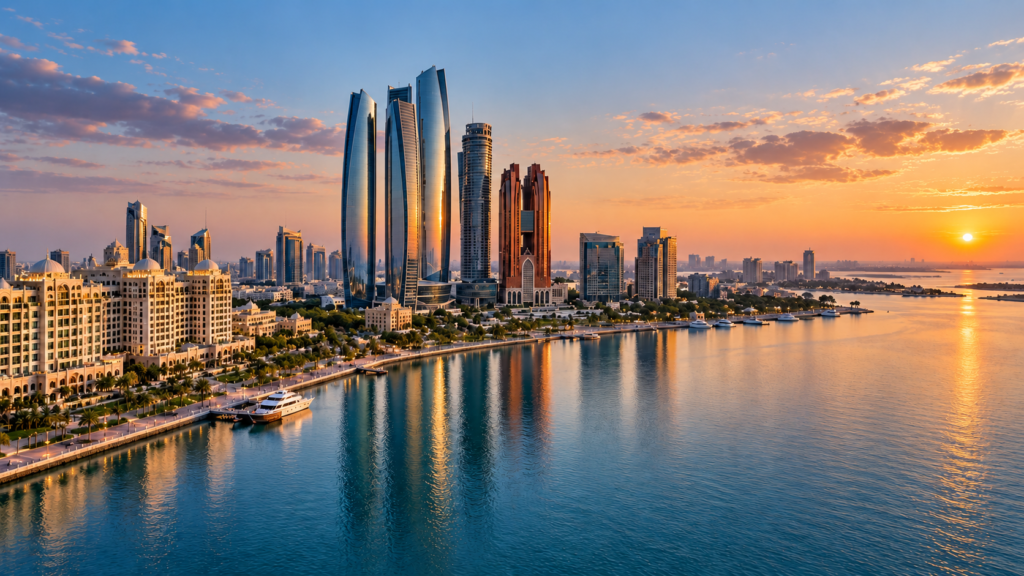
Abu Dhabi has achieved an important milestone in the evolution of its property market, emerging as the world’s leading improver in JLL and LaSalle’s 2026 Global Real Estate Transparency Index.
The emirate climbed eight positions, moving from 41st place in 2024 to 33rd globally in 2026, with a transparency score of 2.42. The recognition is particularly significant because JLL’s Global Real Estate Transparency Index, or GRETI, evaluates markets across 88 countries and 146 city markets using 260 individual transparency measures.
For investors, I believe the importance of this development goes well beyond a ranking.
Greater transparency means investors can make decisions using better information, more accessible transaction data, stronger regulatory frameworks and increasingly sophisticated digital infrastructure. As Abu Dhabi continues attracting international capital, these are becoming fundamental parts of the emirate’s investment proposition.
What Is Abu Dhabi’s JLL Transparency Ranking in 2026?
Abu Dhabi is ranked 33rd globally in JLL’s 2026 Global Real Estate Transparency Index.
More importantly, it was identified as the world’s leading improver after climbing eight positions from 41st in the previous 2024 edition.
The distinction is important.
Abu Dhabi is not yet the world’s most transparent real estate market. The United Kingdom, France, Australia and the United States remain among the markets at the top of JLL’s global ranking.
Instead, Abu Dhabi has recorded the strongest improvement, demonstrating how quickly the emirate’s real estate infrastructure, regulation and access to market information are developing.
What Does JLL Measure in the Global Real Estate Transparency Index?
The 2026 GRETI assesses 260 individual measures grouped into six major areas:
- Performance Measurement – 25%
- Market Fundamentals – 16.5%
- Governance of Listed Vehicles – 10%
- Regulatory and Legal – 23.5%
- Transaction Process – 15%
- Sustainability – 10%
JLL scores markets on a scale from 1 to 5, where a lower score represents greater transparency.
The index is designed to help international investors, lenders, developers, occupiers, governments and other stakeholders understand how easily they can obtain reliable information and operate within different property markets.
That makes Abu Dhabi’s movement particularly relevant to international investors assessing the emirate alongside established global property destinations.
Why Abu Dhabi’s Property Market Is Becoming More Transparent
One of the strongest drivers behind Abu Dhabi’s improvement has been the digital transformation being led by the Abu Dhabi Real Estate Centre, or ADREC.
According to WAM, Abu Dhabi has expanded publicly accessible real estate information through market dashboards, interactive maps, unit-level transaction information, service-charge data and open APIs designed to improve access to market information.
The development of this infrastructure changes how investors can research the market.
Instead of depending entirely on asking prices, individual broker opinions or fragmented market information, investors increasingly have access to registered transaction information and structured market data.
This allows buyers to ask better questions:
What have comparable properties actually sold for?
How active is a particular community?
What is happening to transaction volumes?
Where is new supply entering the market?
How are rental and sales conditions developing?
For me, this is one of the most important signs of a maturing real estate market.
Madhmoun and the Move Towards Verified Property Listings
Transparency is not limited to transaction information.
ADREC has also introduced Madhmoun, its Multiple Listing Service initiative designed to create a more reliable and verified property-listing environment in Abu Dhabi.
ADREC describes Madhmoun as a centralised platform intended to provide verified property listings and real-time information while improving the reliability of property advertising.
This matters because listing quality directly affects how efficiently buyers can evaluate opportunities.
An investor needs to know whether an advertised property is genuine, whether information is accurate and whether market comparisons are based on reliable inventory.
The more effectively Abu Dhabi addresses these issues, the easier it becomes for international buyers to approach the market with confidence.
Transparency Is Becoming More Important to Global Property Capital
JLL’s wider 2026 research provides important context.
Transaction volumes across the 13 markets classified by JLL as “Highly Transparent” increased by 64% over the previous two years. Those markets account for more than 80% of global direct real estate investment and 56% of global income-producing real estate.
This does not mean transparency alone causes investment growth.
However, it illustrates why institutional investors place such importance on reliable information, regulation, governance and predictable transaction processes.
International capital normally prefers markets where risks can be measured.
As Abu Dhabi improves these foundations, it strengthens its ability to compete for investors who evaluate opportunities across multiple global cities.
Abu Dhabi’s Transparency Improvement Comes During Strong Market Growth
The transparency progress is happening alongside significant expansion in Abu Dhabi’s real estate sector.
Official ADREC data shows that total property transactions reached AED117 billion during the first half of 2026, representing a 112% year-on-year increase in transaction value.
Foreign direct investment in Abu Dhabi real estate reached AED13.8 billion during the same period, up 309% year on year, while non-resident investors from 116 nationalities participated in the market.
These figures should not automatically be attributed to Abu Dhabi’s GRETI improvement.
However, they demonstrate why market infrastructure is becoming increasingly important.
As transaction volumes grow and the investor base becomes more international, buyers require better data, clearer regulations and more efficient transaction systems.
I explored these wider market numbers in my analysis of Abu Dhabi’s AED117 billion H1 2026 real estate market.
What Does Greater Transparency Mean for Property Investors?
From an investment perspective, I see five practical consequences.
1. Better Property Comparisons
Reliable market information makes it easier to compare projects, buildings and communities based on actual transactions rather than marketing claims alone.
This becomes particularly important in areas where investors have a large number of competing developments to evaluate.
For example, buyers researching apartment investment can compare opportunities among established and new developments across Al Reem Island properties for sale.
2. Stronger Due Diligence
Investment decisions should never depend exclusively on projected returns.
Investors need to examine transaction history, competing supply, developer quality, service charges, rental demand, payment plans and potential exit liquidity.
Increasing access to structured data makes this analysis easier.
3. Greater Confidence for Overseas Buyers
A buyer living thousands of kilometres away faces a different risk profile from somebody already familiar with Abu Dhabi.
For international investors, accessible data and clear regulation reduce information asymmetry and make remote investment decisions easier to evaluate.
This is particularly valuable as Abu Dhabi attracts investors from an increasingly diverse range of countries.
4. Better Analysis of Off-Plan Opportunities
Abu Dhabi’s new-development market gives buyers a wide range of options across communities including Yas Island, Saadiyat Island, Al Reem Island, Hudayriyat and other investment areas.
Transparency becomes especially valuable when comparing launch prices, payment plans, expected handover dates and surrounding market conditions.
Investors researching new developments can explore current off-plan properties in Abu Dhabi before comparing individual projects against wider market evidence.
5. A More Mature Long-Term Market
Transparency is ultimately part of market maturity.
Sophisticated real estate markets are not defined only by rising prices or impressive developments. They are also characterised by accessible information, established regulation, reliable transaction processes and clear investor protections.
That is why I consider Abu Dhabi’s improvement in GRETI strategically important.
What This Means for Prime Abu Dhabi Communities
Increasing transparency can be particularly valuable within large investment destinations where buyers need to compare properties across different price points and product types.
Take Saadiyat Island.
An investor might compare beachfront apartments, branded residences, villas and new off-plan developments, each with completely different pricing, supply characteristics and investment objectives.
Having stronger transaction and market information makes those comparisons more meaningful.
Buyers evaluating the luxury segment can review current Saadiyat Island properties and developments alongside broader market information before making a decision.
The same principle applies across Yas Island, Al Reem Island, Al Raha Beach and Abu Dhabi’s expanding investment zones.
Abu Dhabi Has a Target Beyond the 2026 Ranking
The progress is not intended to stop at 33rd place.
Rashed Al Omaira, Director-General of ADREC, said the organisation’s ambition is to position Abu Dhabi among the world’s 25 most transparent real estate markets by 2030.
According to WAM, the next phase is expected to include further access to trusted market information, expansion of digital property services and transactions, and greater use of advanced analytics and artificial intelligence to produce earlier insights into demand, risk and market performance.
That target will be worth watching.
Moving from rapid improver to an established highly transparent global property market requires continued progress in regulation, data accessibility, transaction processes, sustainability information and institutional market infrastructure.
My Perspective: Transparency Could Become One of Abu Dhabi’s Competitive Advantages
For years, conversations about Abu Dhabi real estate have naturally focused on lifestyle, infrastructure, taxation, development quality, rental income and capital appreciation.
I believe transparency deserves to become part of that conversation as well.
The sophisticated investor does not simply ask:
“Where are prices increasing?”
They ask:
“Can I understand why they are increasing?”
“Can I verify the information?”
“Can I compare this opportunity objectively?”
“Do I understand the risks?”
“Will the market remain credible when conditions change?”
Those questions become increasingly important as Abu Dhabi attracts larger volumes of global capital.
The most encouraging element of the 2026 JLL result is therefore not simply that Abu Dhabi moved eight places.
It is what has contributed to that movement: stronger digital infrastructure, greater access to information, regulatory development and a more institutional property ecosystem.
Conclusion
Abu Dhabi being recognised as the world’s leading improver in JLL’s 2026 Global Real Estate Transparency Index represents another stage in the evolution of its property market.
The emirate climbed from 41st to 33rd globally, achieving a transparency score of 2.42 while expanding its digital market infrastructure and access to property information.
At the same time, the market is becoming larger and increasingly international, with AED117 billion in real estate transactions recorded during H1 2026 and investors from 116 nationalities participating in the market.
For investors, the message is not that every Abu Dhabi property automatically represents a good investment.
Greater transparency actually makes careful selection more important.
The opportunity is to use better information to compare locations, projects, developers, pricing, rental fundamentals and long-term supply—and make investment decisions based on evidence rather than market noise.
That, in my view, is what a mature investment market should ultimately provide.
Abu Dhabi ranked 33rd globally in JLL and LaSalle’s 2026 Global Real Estate Transparency Index with a score of 2.42. It moved eight positions higher from 41st in 2024, making Abu Dhabi the world’s leading improver in the 2026 index.
No. Abu Dhabi was named the world’s leading improver, rather than the world’s most transparent property market. JLL’s highest-ranked markets in 2026 include the United Kingdom, France, Australia and the United States. Abu Dhabi’s significance lies in the speed of its improvement, moving from 41st to 33rd globally.
Transparency gives investors greater access to transaction information, market fundamentals and regulatory information, helping them compare properties and assess risks more effectively. Investors who want to place this development within the wider market context can also read my analysis of Abu Dhabi’s H1 2026 real estate performance.
Abu Dhabi has expanded digital property services and public access to market information through initiatives including dashboards, interactive maps, unit-level transaction data and open APIs. Regulatory development and initiatives such as Madhmoun have also been designed to improve the quality and reliability of property information.
Investors should compare opportunities according to location, price, developer, payment structure, supply, rental demand and their individual investment objectives. Buyers researching new projects can explore current Abu Dhabi off-plan properties with NAS Luxury Real Estate as part of their property research.