
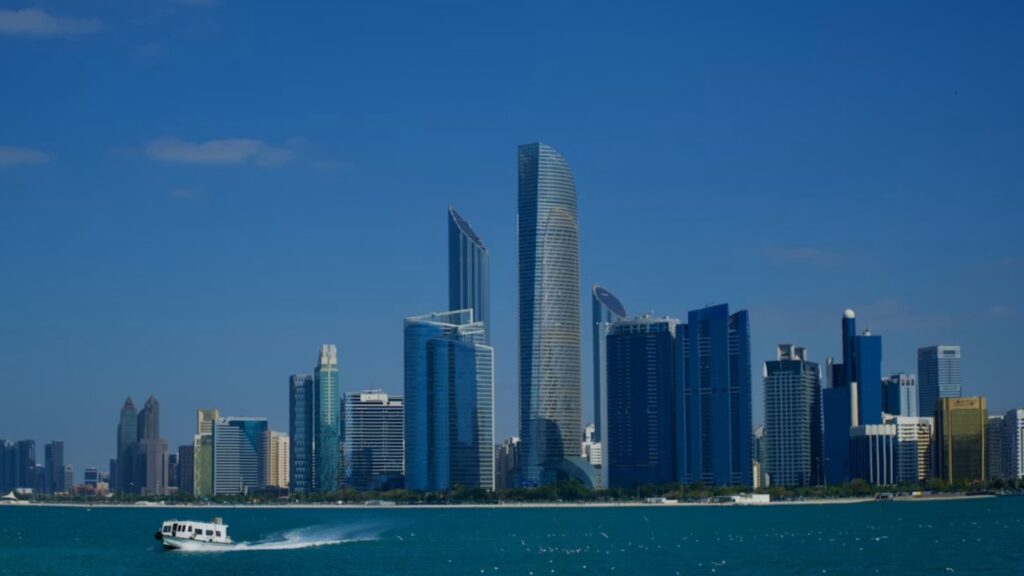
Infrastructure spending is the most honest signal a government can send about its confidence in a city’s future. When a government commits AED 200 billion to ongoing projects and then layers a further AED 55 billion public-private partnership programme on top, it is making a statement that transcends politics or marketing. It is writing the physical future of the city in concrete, steel, and capital. For property investors who understand the relationship between infrastructure and residential value, Abu Dhabi’s mid-2026 position is the clearest buy signal the emirate has ever delivered.
The Abu Dhabi Projects and Infrastructure Centre is currently overseeing a capital investment portfolio worth more than AED 200 billion, comprising over 600 ongoing projects spanning housing, transportation, healthcare, education, tourism, and community infrastructure. This portfolio represents one of the largest infrastructure capital expenditure programmes in the entire Gulf region. It is the physical foundation upon which every residential property value in Abu Dhabi rests, and it is being delivered at a pace and scale without precedent in the emirate’s history.
The Forbes Middle East Summit: Global Attention Lands on Abu Dhabi June 23
The Forbes Middle East Building the Future Summit 2026 opens in Abu Dhabi on June 23, 2026, under the patronage of the UAE Ministry of Energy and Infrastructure, bringing together approximately 3,000 policymakers, business executives, and industry experts to examine the future of sustainable urban development across the Middle East and North Africa.
The summit is being held under the patronage of the Ministry of Energy and Infrastructure and will focus on the intersection of infrastructure, smart cities, clean energy, mobility, and artificial intelligence. Among the confirmed government participants are senior officials from the Ministry of Finance, Ministry of Energy and Infrastructure, the Department of Municipalities and Transport, Abu Dhabi Global Market, and the UAE Cyber Security Council.
For property investors, the significance of this summit is not the conference itself. It is what the conference represents: global institutional attention arriving in Abu Dhabi at precisely the moment when the emirate’s AED 200 billion infrastructure programme is in active delivery. The 3,000 policymakers, investors, and executives attending will leave Abu Dhabi with a direct, experiential understanding of what AED 200 billion in urban investment actually looks like. That understanding translates into capital allocation decisions in the weeks and months that follow. Ali Al Jebely, Founder and Chairman of One Development and One Holding Group, confirmed this positioning directly: “Amid evolving market dynamics, the Forbes Middle East Building the Future Summit serves as an important platform to highlight the UAE real estate sector, its resilience, innovation, and global appeal.”
The AED 200 Billion Portfolio: What Is Actually Being Built
The ADPIC portfolio is not a vision document. It is an active delivery programme with over 600 projects spanning every sector that determines residential property value.
| Sector | Portfolio Scale | Direct Property Value Impact |
| Housing and residential | Thousands of units across Abu Dhabi, Al Ain, Al Dhafra | Direct supply delivery |
| Transportation and roads | 300+ km of new roads, bridges, tunnels, intersections | Connectivity premium uplift |
| Healthcare | New hospitals and advanced medical facilities | Professional tenant demand |
| Education | Schools, universities, educational facilities | Family buyer appeal and rental demand |
| Tourism and community | Cultural attractions, public amenities, sports facilities | Lifestyle premium and visitor demand |
| Water and flood protection | Dams, storage, drainage, climate resilience | Infrastructure longevity and safety |
These are not parallel tracks. They are interdependent systems that collectively define whether a residential address appreciates or stagnates over a 10 to 20-year ownership horizon. Roads determine commute times. Schools determine family buyer demand. Hospitals generate professional employment. Cultural attractions drive tourism and global recognition. When all six categories advance simultaneously under a single AED 200 billion capital programme, the residential property market above that infrastructure layer appreciates with a momentum that no single sector catalyst alone can generate.
The AED 55 Billion PPP Programme: The Next Wave Already Funded
Beyond the existing AED 200 billion portfolio, Abu Dhabi confirmed a AED 55 billion public-private partnership programme to finance 24 new infrastructure projects during 2026 and 2027, making it one of the largest PPP initiatives in the Gulf region.
The AED 55 billion is distributed across three primary categories. Transport and road projects receive approximately AED 35 billion to develop 11 projects covering over 300 kilometres of new roads, bridges, tunnels, and major intersections while improving connectivity between emerging residential and development areas. Water and flood protection receives AED 11 billion to develop dams, water storage facilities, stormwater drainage systems, and flood protection infrastructure, strengthening Abu Dhabi’s climate resilience. Social infrastructure receives approximately AED 9 billion for the construction and development of schools, universities, hospitals, sports facilities, and modern community amenities designed to accommodate anticipated population growth.
| PPP Programme Category | Allocation | Projects |
| Transport and Roads | AED 35 billion | 11 projects, 300+ km of roads, bridges, tunnels |
| Water and Flood Protection | AED 11 billion | 5 projects, dams, drainage, climate resilience |
| Social Infrastructure | AED 9 billion | Schools, universities, hospitals, sports facilities |
| Total | AED 55 billion | 24 projects across 2026 and 2027 |
For property investors, the transport allocation is the most immediately significant. The new bridge links connecting Hudayriyat Island, Al Nouf, and Abu Al Abyad Island confirmed at ADIS 2026 in May form part of this programme. The phase two tender for the Khalifa City to Saadiyat Island bridge via Umm Yifeenah sits within this budget. These specific connectivity improvements will directly compress travel times between Abu Dhabi’s most active residential investment destinations and the rest of the emirate, delivering the commute-time reduction that global property research consistently identifies as the single most powerful driver of residential value appreciation.
Smart Infrastructure and Unified Governance: Eliminating the Delays That Cost Investors
Abu Dhabi has introduced a unified infrastructure governance framework bringing together 14 government entities under a single project delivery mechanism, designed to accelerate approvals, reduce project delivery timelines, and improve coordination among stakeholders. The framework is expected to lower operating costs, improve government spending efficiency, and accelerate the delivery of strategic projects.
For property investors, construction timeline risk is one of the least appreciated but most financially significant variables in off-plan investment. When infrastructure delivery runs behind schedule, handover dates shift, rental income is deferred, and capital appreciation is delayed. The unified governance framework is a direct operational response to this risk, eliminating the inter-agency friction that has historically been the primary source of Abu Dhabi infrastructure delays.
Official data and recent economic reports indicate that Abu Dhabi has moved beyond the phase of building essential infrastructure and entered a new era focused on developing smart, sustainable infrastructure capable of supporting the future economy, with a strong emphasis on public-private partnerships and attracting local and international investment. This transition from essential infrastructure to smart infrastructure is the marker of a city that has successfully completed its foundational build-out and is now optimising and expanding that foundation. It is the stage at which property values historically demonstrate the most consistent appreciation because the city’s desirability is established and its institutional depth is growing. For investors seeking abu dhabi real estate investment advisor guidance on how to position within this infrastructure acceleration cycle, the confluence of AED 200 billion in active delivery and AED 55 billion in newly funded PPP projects creates an entry timing argument that few other global markets can currently match.
What This Means for Abu Dhabi’s Residential Property Market
The connection between AED 200 billion in government infrastructure and residential property values operates through four specific mechanisms. Population growth support absorbs residential supply. Abu Dhabi’s population is growing at 7.5% annually. Roads, schools, hospitals, and community facilities are the physical infrastructure that allows that population growth to translate into real residential demand rather than bottlenecking against infrastructure constraints.
Connectivity improvements directly uplift property values in connected corridors. The AED 35 billion transport allocation will reduce commute times across the emirate, expanding the geographic radius of commutable residential addresses and lifting values in areas that benefit from improved connectivity.
Employer infrastructure creates professional tenant demand. AED 9 billion in new schools, universities, and hospitals will employ thousands of professionals who require residential accommodation. Each new hospital generates nurse, doctor, and administrative staff demand. Each new school generates teacher and support staff demand. These employment-driven rental markets are the most stable and highest-retention tenant bases available in any residential market.
Quality of life infrastructure commands lifestyle premiums. Sports facilities, cultural attractions, and public amenities are the differentiators that allow Abu Dhabi to attract and retain the globally mobile, high-income residents who pay premium rents and sustain capital values at the top of the market. Sharif Al Olama, UAE Undersecretary for Energy and Petroleum Affairs, confirmed the directional intent: “The UAE continues to adopt a forward-looking approach that combines clean energy, digital transformation, and resilient infrastructure to support economic growth and enhance quality of life.” For curated access to residential investment opportunities across Abu Dhabi , our property advisory team maintains specialist knowledge of which communities are positioned to benefit most directly from each infrastructure category.
Conclusion: AED 255 Billion Reasons to Be in This Market
The combination of ADPIC’s active AED 200 billion portfolio and the AED 55 billion PPP pipeline represents total committed infrastructure capital of AED 255 billion across Abu Dhabi’s residential ecosystem. This is not aspiration. It is the funded, contracted, and actively delivered foundation that underpins every residential property value in the emirate. When global investors and policymakers gather at the Forbes Middle East Building the Future Summit on June 23, they will be standing in a city that is mid-delivery on one of the world’s most ambitious urban transformation programmes. The residential property market sitting above that programme has already delivered 160.7% year-on-year transaction growth, 17.8% annual price appreciation, and AED 8.27 billion in Q1 FDI. The infrastructure ensures those fundamentals will sustain.
The Abu Dhabi Projects and Infrastructure Centre oversees Abu Dhabi’s capital infrastructure programme, currently managing a portfolio worth more than AED 200 billion across over 600 active projects spanning housing, transportation, healthcare, education, tourism, and community infrastructure. This represents one of the largest government infrastructure capital expenditure programmes in the Gulf region. For guidance on Luxury real estate investment advisor Abu Dhabi services aligned with Abu Dhabi’s infrastructure delivery zones, contact our team.
The AED 55 billion public-private partnership programme announced at ADIS 2026 finances 24 new infrastructure projects across 2026 and 2027. The allocation covers AED 35 billion for 11 transport and road projects including over 300 km of new roads, bridges, and tunnels; AED 11 billion for five water and flood protection projects; and AED 9 billion for social infrastructure including schools, universities, hospitals, and sports facilities. It is one of the largest PPP initiatives in the Gulf region.
The Forbes Middle East Building the Future Summit 2026 opens in Abu Dhabi on June 23, 2026, bringing together approximately 3,000 policymakers, business executives, and industry experts to examine sustainable urban development across the Middle East. The summit’s presence in Abu Dhabi during active delivery of an AED 200 billion infrastructure programme ensures global institutional attention lands on the emirate’s real estate market at its most consequential moment. Historically, major investment summits generate elevated transaction activity in the months that follow.
ADPIC’s unified framework brings 14 government entities under a single NOC issuance and project delivery mechanism, specifically designed to accelerate approvals and reduce construction timeline delays. For off-plan property investors, this framework directly reduces the risk of handover date slippage by eliminating the inter-agency administrative friction that has historically been the primary cause of Abu Dhabi infrastructure delays. On-time infrastructure delivery means on-time handovers and on-time rental income commencement. For a personalised analysis of off-plan investment advisory and handover risk assessment across Abu Dhabi’s key districts, our brokerage specialists provide end-to-end investment support.
Infrastructure investment supports residential values through four mechanisms: population growth accommodation (Abu Dhabi grows at 7.5% annually and requires roads, schools, and hospitals to sustain that growth as residential demand); connectivity improvement (300+ km of new roads reduce commute times, lifting property values in connected corridors); professional employment creation (new hospitals and schools generate stable professional tenant demand); and quality-of-life infrastructure (sports, cultural, and community facilities command lifestyle premiums that sustain capital values). For a best real estate consultant abu dhabi assessment of which residential districts will benefit most from the AED 55 billion PPP pipeline, speak with our advisory team.