
Infrastructure spending is the most reliable long-term signal available to any property investor. Roads, bridges, utilities, transport systems, schools, and social facilities do not follow market sentiment — they follow government conviction. And the Abu Dhabi Infrastructure Summit (ADIS 2026), held from May 12 to 14 at ADNEC, delivered that conviction in figures that leave little room for ambiguity.
As someone advising both local and international investors in Abu Dhabi’s luxury property market, I view ADIS 2026 as one of the clearest infrastructure-led investment signals the emirate has delivered in years. The Abu Dhabi Investment Office (ADIO) and Abu Dhabi Projects and Infrastructure Centre (ADPIC) jointly launched a new AED 55 billion public-private partnership pipeline, bringing 24 infrastructure projects across transport, utilities, and social sectors to market throughout 2026 and 2027.
For investors tracking where Abu Dhabi’s next cycle of value creation is headed, these announcements are not background noise — they are the roadmap.
Table of Contents
ToggleThe AED 55 Billion PPP Pipeline: What Gets Built and Why It Matters
The new partnership framework will bring 24 infrastructure projects to market across transportation, infrastructure, and social sectors throughout 2026 and 2027.
The investment is distributed across three major categories:
- Road and connectivity projects
- Urban infrastructure and water systems
- Social infrastructure including schools and community facilities
This matters because every layer of successful real estate growth depends on infrastructure.
Roads and bridges determine accessibility. Utility infrastructure determines scalability. Schools, healthcare, and community facilities determine long-term livability — and ultimately influence both rental demand and resale values.
For property investors, infrastructure of this scale is not an abstract promise. It is a funded, government-backed, publicly committed programme that reveals where Abu Dhabi’s future urban density will expand and where long-term property appreciation is most likely to follow.
ADPIC already oversees a capital pipeline exceeding AED 200 billion across Abu Dhabi. The AED 55 billion PPP programme represents the next major phase of that broader commitment being opened to private sector participation.
New Bridges to Hudayriyat Island: A Direct Investment Signal
One of the most important announcements for Abu Dhabi property investors was the confirmation of new bridge infrastructure connecting Hudayriyat Island directly to the wider Abu Dhabi network.
The upcoming phase includes:
- New bridge links connecting Hudayriyat Island, Al Nouf, and Abu Al Abyad Island
- Major road upgrades across Abu Dhabi
- The release of phase two tenders connecting Khalifa City to Saadiyat Island via Umm Yifeenah
For investors who committed capital to Modon’s Wadeem, Nawayef, Bashayer, and Al Naseem communities, this is a critical validation of the island’s long-term connectivity premium.
Infrastructure creates accessibility.
Accessibility creates demand.
Demand creates appreciation.
Hudayriyat Island already recorded AED 11.97 billion in real estate transactions during Q1 2026 alone, making it one of Abu Dhabi’s highest-performing districts.
Enhanced bridge connectivity is likely to accelerate residential absorption, improve long-term occupancy levels, tighten vacancy rates, and strengthen rental yield performance as projects approach handover.
Aldar’s Five Mega Projects and the Launch of Al Mihsinah Island
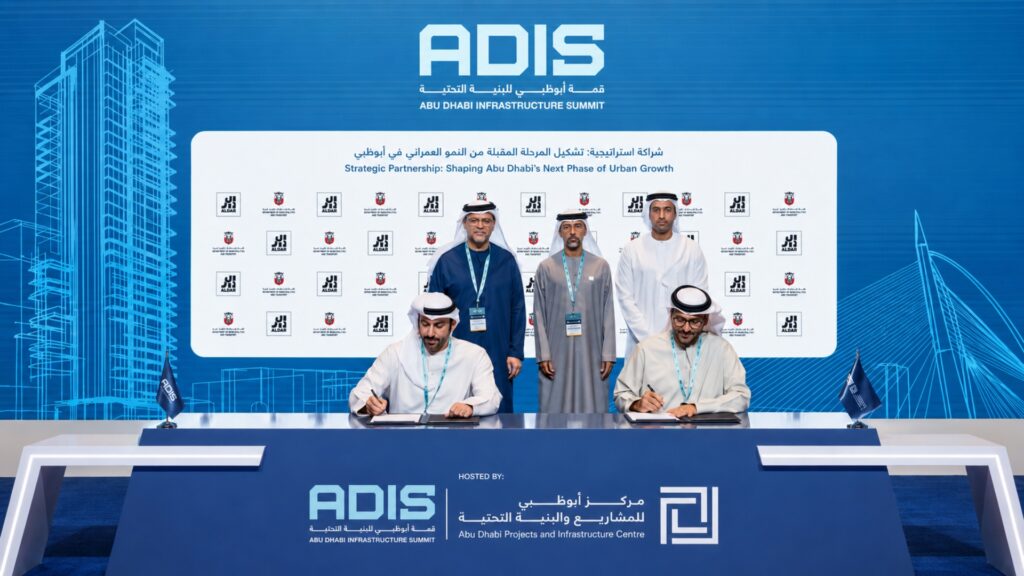
Another major ADIS 2026 announcement was Aldar Properties’ strategic partnership with the Department of Municipalities and Transport to develop five mega projects spanning more than 7 million square metres.
Integrated residential communities are planned across:
- Muwaylih
- Mussafah
- Al Zahiyah
- Al Fayah
But the most significant announcement for premium property investors may be the activation of Al Mihsinah Island as a new waterfront residential destination.
Waterfront communities have consistently outperformed many inland districts across Abu Dhabi due to limited supply, lifestyle appeal, and stronger long-term demand fundamentals.
ADIS 2026 also highlighted Aldar’s positioning of Fahid Island as Abu Dhabi’s first coastal wellness destination and the world’s first Fitwel-certified island masterplan.
These projects signal something larger:
Abu Dhabi is intentionally expanding its residential geography beyond traditional core districts while simultaneously elevating lifestyle quality across new master-planned communities.
The AED 4.21 Billion Housing Package Strengthens Market Stability
The summit also confirmed the Crown Prince of Abu Dhabi’s approval of a housing assistance package valued at AED 4.21 billion benefiting 2,652 Emirati citizens.
At the summit, Abu Dhabi Housing Authority outlined its transition away from repetitive villa designs toward expandable “custom houses” designed to support future generations.
This announcement is important for investors because large-scale sovereign housing programmes support:
- Construction sector stability
- Long-term residential demand
- Local purchasing power
- Supply chain continuity
- Sustainable market absorption
Abu Dhabi’s residential market benefits from something many global markets lack: strong local end-user demand supported by government-led housing initiatives.
ADHA also showcased a fully integrated digital housing ecosystem connected across more than 36 government and private entities, enabling citizens to access housing services through a streamlined digital platform.
This level of institutional coordination reinforces confidence in Abu Dhabi’s long-term residential growth model.
Unified Governance Could Accelerate Infrastructure Delivery
ADPIC also launched a unified governance framework bringing together 15 government entities — including municipalities, telecommunications providers, water and energy companies, and Etihad Rail — under a single infrastructure delivery mechanism.
The framework is designed specifically to:
- Accelerate NOC approvals
- Reduce administrative delays
- Improve project coordination
- Increase delivery efficiency
For investors, this matters enormously.
One of the biggest risks in off-plan markets globally is delayed infrastructure delivery. Abu Dhabi’s approach directly addresses that concern.
The emirate’s economy reached a record AED 325.7 billion in Q3 2025, while the construction sector expanded by 13.9% year-on-year.
When rapid construction growth operates alongside unified infrastructure governance, announced timelines become significantly more credible — strengthening investor confidence across the off-plan market.
Why Infrastructure Remains Abu Dhabi’s Strongest Investment Story
The announcements made during ADIS 2026 confirm that Abu Dhabi’s infrastructure strategy is not reactive spending.
It is proactive, sovereign-backed, long-term urban planning designed to remain ahead of future residential demand.
New bridges to Hudayriyat Island.
Five Aldar mega projects.
The activation of Al Mihsinah Island.
AED 55 billion in infrastructure investment.
AED 4.21 billion in housing support.
A unified infrastructure governance framework.
Taken together, these initiatives form one of the strongest long-term investment foundations Abu Dhabi’s residential market has seen in years.
The investors who benefit most from infrastructure cycles are usually the ones who position themselves before the wider market fully reacts.
In my view, ADIS 2026 has provided one of the clearest roadmaps Abu Dhabi has released in recent years.
If you are evaluating where to deploy capital in Abu Dhabi’s evolving residential market, my team and I are available to help identify opportunities aligned with your long-term investment goals.
ADIS 2026 is the Abu Dhabi Infrastructure Summit held at ADNEC from May 12–14, 2026. The summit brought together government entities, developers, and investors to announce major infrastructure, transport, and urban development projects across Abu Dhabi.
Infrastructure directly impacts accessibility, livability, rental demand, and long-term capital appreciation. Areas receiving major government investment often experience stronger property value growth over time.
Major announcements included:
- AED 55 billion infrastructure pipeline
- New Hudayriyat Island bridge connections
- Aldar’s five mega residential projects
- Activation of Al Mihsinah Island
- AED 4.21 billion housing assistance package
- Unified infrastructure governance reforms
Hudayriyat Island is benefiting from major infrastructure upgrades, new bridge connectivity, waterfront master-planned communities, and strong transaction activity, making it one of Abu Dhabi’s fastest-growing residential investment destinations.
Many investors choose to work with an experienced abu dhabi real estate investment advisor to identify infrastructure-led opportunities, evaluate long-term appreciation potential, and make data-driven investment decisions.
Investors often seek guidance from the best real estate consultant abu dhabi to identify emerging growth corridors before infrastructure-driven appreciation becomes fully reflected in market pricing.