
Not every announcement that affects property values comes wrapped in a launch event or a billion-dirham price tag. On August 7, 2026, Environment Agency – Abu Dhabi and the Department of Municipalities and Transport confirmed they have entered a new phase of collaboration under the Abu Dhabi Waste Management Strategy, focusing on delivering a programme of environmental clean-up activities that combine structured field operations with systematic data analysis, reflecting a shared commitment to supporting Abu Dhabi’s environmental protection and sustainability agenda.
This is not a headline-grabbing infrastructure announcement in the mould of Sphere Abu Dhabi or a AED 100 billion masterplan. It is, instead, a genuinely important signal about how seriously Abu Dhabi’s government is treating the environmental quality of the natural assets, coastlines, marine waters, and protected mangrove systems, that increasingly anchor the emirate’s most valuable waterfront residential communities.
What This Collaboration Actually Involves
The EAD-DMT partnership goes beyond a one-off clean-up event. This collaboration forms part of a broader vision to unify government efforts and transform clean-up operations into strategic tools for environmental monitoring. To date, four clean-up campaigns have been carried out at selected sites, with plans underway to deliver two specialised marine operations, in addition to a series of land-based and coastal efforts throughout the year.
These activities are delivered in partnership with strategic stakeholders, including Tadweer Group, the Abu Dhabi Marine Sports Club, and a number of diving associations. Tadweer Group supports waste collection, sorting, and transport to appropriate treatment facilities and final disposal sites, while the Abu Dhabi Marine Sports Club plays a key role in executing marine operations in accordance with specialised professional standards.
| Initiative Detail | Information |
| Lead agencies | Environment Agency – Abu Dhabi (EAD) and DMT |
| Clean-up campaigns completed to date | 4 |
| Upcoming marine operations planned | 2 specialised operations |
| Scope | Land-based, coastal, and marine sites |
| Key partners | Tadweer Group, Abu Dhabi Marine Sports Club, diving associations |
| Data framework | Sahim – Citizen Science programme |
The Real Innovation: A Data-Driven Approach, Not Just Cleaning
What distinguishes this initiative from a standard municipal clean-up effort is its methodology. The initiative goes beyond removing waste from targeted sites. It adopts a systematic methodology that includes waste classification, weighing, and documentation within a structured field database under the Sahim – Citizen Science programme. This data is then analysed to identify the most prevalent waste types across terrestrial and marine environments, providing a clear picture of waste patterns and spatial distribution.
This approach represents a significant shift from traditional waste management to a data-driven model, where findings support relevant authorities and decision-makers in developing more targeted and effective policies and interventions. Field data also helps to identify priorities, optimise resource allocation and tailor awareness efforts to the waste types most recorded at each location.
Ahmed Baharoon, Executive Director of the Information, Science and Environmental Awareness Sector of EAD, explained the strategic intent: “This collaboration with DMT reflects a strategic shift in the way waste is managed, as we work to link field operations with systematic scientific analysis through the Sahim: Citizen Science programme. Collecting precise data on waste types and quantities enables us to better understand waste patterns, identify potential sources through the Sahim application, and develop evidence-based solutions that support the emirate’s sustainability objectives. This also allows us to continuously measure impact and refine policies and procedures based on real-world findings, improving long-term efficiency and ensuring resources are channelled towards priority areas.”
Why This Matters Directly for Abu Dhabi’s Waterfront Property Market
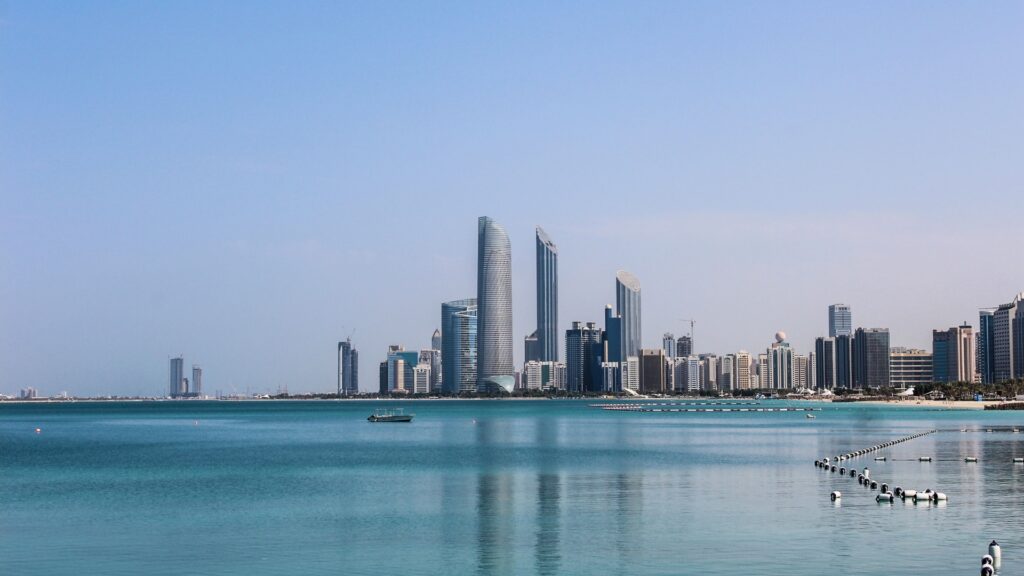
The connection between this initiative and property values may not be immediately obvious, but it is genuinely direct. Abu Dhabi’s highest-value and fastest-appreciating residential communities in 2026, Saadiyat Island, Hudayriyat Island, Jubail Island, and Yas Island’s coastal developments, are built almost entirely around waterfront, beach, and mangrove-adjacent settings. The natural environmental quality of these coastlines and marine waters is not a peripheral amenity for these communities. It is the core asset being sold.
Rashed Abdullah Al Kaabi, Acting Executive Director of the Technical Operations Support Sector at DMT, framed the initiative’s broader significance: “This initiative represents a model of integrated institutional cooperation in support of Abu Dhabi’s environmental objectives. Together with EAD and our strategic stakeholders, we are delivering structured clean-up initiatives that combine field operations with data collection and analysis, contributing to more precise and sustainable waste management solutions across land, marine and coastal sites. Through this collaboration, we are advancing a proactive planning approach and strengthening coordination with partners, enhancing the efficiency of field efforts and contributing to the cleanliness of public facilities and natural areas.”
A data-driven waste management system that identifies exactly where waste accumulates and channels resources toward those priority areas is a direct maintenance mechanism for the beaches, marinas, and mangrove parks that developers like Aldar, Modon, and LEAD Development have built entire masterplans around. For a beachfront villa buyer on Saadiyat Island or a mangrove-adjacent purchaser at Jubail Island, the long-term cleanliness and ecological health of the surrounding natural environment is directly tied to the asset’s enduring value, not merely its initial marketing appeal.
The Direct Connection to Jubail Island’s Mangrove-Based Communities
This EAD-DMT collaboration sits within a much larger and already well-established environmental protection framework specifically relevant to Abu Dhabi’s newest waterfront communities. Jubail Island, a 4,000-hectare, AED 15 billion masterplan positioned between Yas Island and Saadiyat Island, has operated under a formal partnership with EAD since the establishment of the Jubail Mangrove Innovation Centre, a dedicated hub for mangrove research, training, and restoration developed under the Abu Dhabi Mangrove Initiative.
Together, EAD and Jubail Island Investment Company have already planted more than 600,000 mangrove trees as part of a goal to plant one million trees over the next decade, directly supporting the UAE’s national target of planting 100 million mangroves by 2030. Mangroves provide a variety of environmental and economic services and are ideal nature-based solutions to help meet the challenge of climate change, with the ability to store and sequester carbon up to four times higher than trees in the Amazon rainforest, according to EAD’s own assessment of the ecosystem’s value.
For buyers of Rimas or any of Jubail Island’s other villages, this newly strengthened EAD-DMT waste management collaboration is a direct extension of the same institutional environmental protection framework already actively preserving the mangrove and coastal ecosystem their properties are built around. It confirms that Abu Dhabi’s government is not simply permitting waterfront development near sensitive natural environments; it is actively resourcing the ongoing monitoring and maintenance required to keep those environments healthy over the long term. For buyers seeking Trusted VIP property broker Abu Dhabi guidance on which waterfront and nature-adjacent communities benefit most directly from Abu Dhabi’s institutional environmental protection framework, this kind of government-level commitment is a genuinely relevant due diligence factor.
What This Signals for ESG-Conscious Investors
Abu Dhabi’s property market has increasingly attracted ESG-conscious institutional capital, evidenced by Aldar’s DJSI top-quartile sustainability ranking and MSCI A rating confirmed in its 2025 Sustainability Report. A government-level, data-driven environmental monitoring and clean-up initiative operating across land, coastal, and marine sites is exactly the kind of institutional-level environmental stewardship that ESG-focused investors specifically screen for when evaluating a jurisdiction’s long-term sustainability credentials, distinct from any single developer’s individual green building certifications.
The initiative underscores that community participation is an essential element in achieving long-term environmental sustainability. It encourages individuals to adopt responsible waste management behaviours and fosters a culture of maintaining the cleanliness of natural and public spaces. This civic dimension, EAD and DMT explicitly building community participation into the initiative through the Sahim Citizen Science app, adds a further layer of durability to the programme, since environmental stewardship embedded in community behaviour tends to persist independently of any single government funding cycle. For investors seeking Abu Dhabi’s leading real estate advisory service guidance on how environmental governance factors into long-term asset selection across the emirate’s waterfront communities, this kind of institutional environmental commitment is an increasingly relevant part of a comprehensive investment thesis.
Conclusion: The Quiet Infrastructure Behind Abu Dhabi’s Waterfront Premium
Abu Dhabi’s waterfront and nature-adjacent residential communities, from Saadiyat Island’s beaches to Jubail Island’s mangroves to Hudayriyat Island’s coastline, derive a meaningful share of their long-term value from the ongoing health of the natural environments surrounding them. The EAD-DMT waste management collaboration, unglamorous as it may sound, is a direct institutional commitment to protecting exactly that value, through data-driven monitoring, targeted resource allocation, and sustained clean-up operations across land, coastal, and marine sites. For property investors evaluating Abu Dhabi’s waterfront market, this kind of government-level environmental infrastructure is the quiet, unglamorous work that ultimately protects the premium these communities command.
Environment Agency – Abu Dhabi and the Department of Municipalities and Transport announced a new phase of collaboration under the Abu Dhabi Waste Management Strategy, delivering a data-driven programme of clean-up activities across land, coastal, and marine sites. Four campaigns have been completed to date, with two additional specialised marine operations planned.
The programme uses a systematic methodology involving waste classification, weighing, and documentation within a structured field database under the Sahim – Citizen Science programme, transforming clean-up operations into a data-driven monitoring tool that identifies waste patterns and helps target resources toward priority areas, rather than a one-time removal effort.
Jubail Island Investment Company has operated a formal partnership with EAD since establishing the Jubail Mangrove Innovation Centre under the Abu Dhabi Mangrove Initiative, planting more than 600,000 mangrove trees toward a goal of one million. The EAD-DMT waste management collaboration extends this same institutional environmental protection framework, directly relevant to buyers in Jubail Island’s mangrove-adjacent communities. For access to Jubail Island’s villa communities, our advisory team provides detailed guidance.
Abu Dhabi’s highest-value residential communities, including Saadiyat Island, Hudayriyat Island, Jubail Island, and Yas Island’s coastal developments, are built around waterfront and natural settings that function as core value drivers, not peripheral amenities. Institutional environmental monitoring and maintenance directly protects the long-term ecological quality that sustains these communities’ premium positioning over time.
A government-level, data-driven environmental monitoring programme spanning land, coastal, and marine sites is exactly the kind of institutional environmental stewardship that ESG-focused investors screen for when evaluating a jurisdiction’s sustainability credentials, complementing individual developer certifications like Aldar’s DJSI ranking.